

Are Ripper Teeth common in the animal kingdom?
Ripper teeth, often recognized for their sharp and pointed structures, are a fascinating aspect in both the animal kingdom and the industrial world. As a dedicated supplier of high - quality ripper teeth, I have delved deep into understanding their prevalence in nature and their significance in modern applications.
In the animal kingdom, ripper teeth are not as common as one might think. These specialized teeth are designed for a very specific purpose: to tear, rip, and penetrate tough materials. Predatory animals are the most likely candidates to possess such teeth, as they need to efficiently subdue and consume their prey.
One of the most well - known examples of animals with ripper teeth is the great white shark. The great white shark has rows of large, triangular, and serrated teeth. These teeth are incredibly sharp and are used to bite into the flesh of their prey, which often includes seals, sea lions, and other marine mammals. The serrations on the teeth act like a saw, allowing the shark to easily tear through the tough skin and blubber of its victims. When a great white shark attacks, it uses its powerful jaws to grip the prey, and then the ripper teeth do the rest of the work, slicing through the meat with remarkable efficiency.
Another example is the saber - toothed cat, an extinct predator that roamed the Earth during the Pleistocene epoch. The saber - toothed cat had long, curved canine teeth that protruded well below its lower jaw. These teeth were its signature ripper tools. Scientists believe that the saber - toothed cat used these teeth to deliver a fatal bite to the throat or abdomen of its prey. The long canines could penetrate deeply into the soft tissues, causing massive blood loss and quickly incapacitating the victim. Although these animals are extinct, their unique dental adaptations give us insights into the evolution of ripper teeth in the animal kingdom.
However, compared to the vast number of animal species on Earth, the proportion of animals with true ripper teeth is relatively small. Most herbivorous animals have teeth that are adapted for grinding and chewing plant material. For example, cows have flat molars that are used to crush and break down tough grasses. Rodents, on the other hand, have incisors that are continuously growing and are used for gnawing on wood, nuts, and other hard objects, but these are not ripper teeth in the traditional sense.
In the insect world, some predatory insects also have structures that can be considered analogous to ripper teeth. For instance, mantises have sharp mandibles that they use to capture and tear apart their prey, which usually consists of other insects. These mandibles work like scissors, allowing the mantis to quickly dispatch its victims. But again, when considering the millions of insect species, the number with such specialized "ripper" mouthparts is a small fraction.
Moving from the animal kingdom to the industrial world, ripper teeth play a crucial role in heavy - duty construction and mining operations. At our company, we offer a wide range of ripper teeth that are designed to meet the diverse needs of our customers. For example, the CAT 8E7350 Weld On Ripper Noses are specifically engineered for heavy - duty applications. These ripper noses are made from high - quality materials that can withstand the extreme forces and abrasion encountered in tasks such as breaking up hard rock, asphalt, and compacted soil.
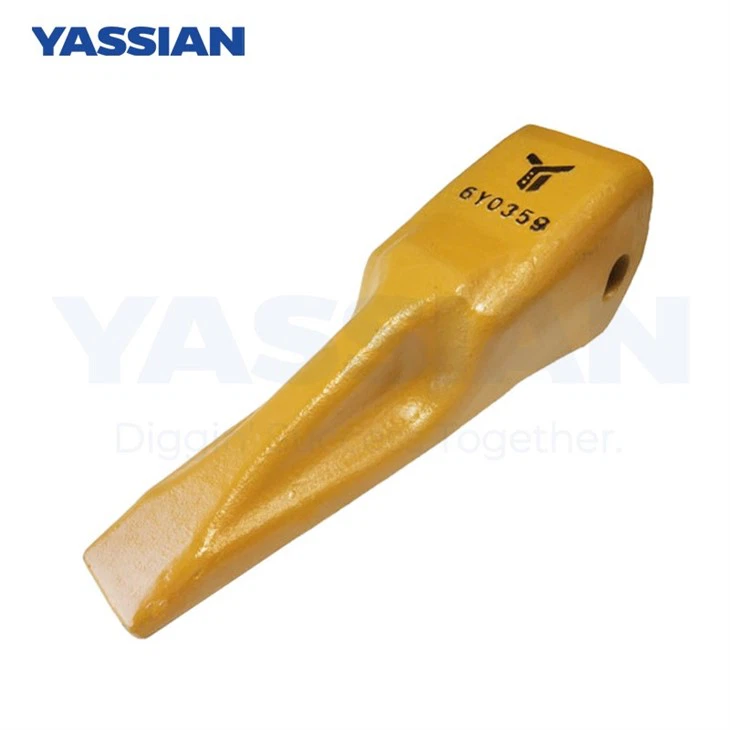
Our 6Y0359 Ripper Tooth is another popular product. It is designed for bulldozers and is used to improve the penetration ability of the machine. The tooth is crafted with precision to ensure maximum efficiency and durability. Whether it's for large - scale construction projects or mining operations, this ripper tooth can significantly enhance the performance of the equipment.
The 6Y3552 Ripper Teeth for Dozer are also a top - choice for many contractors. These teeth are suitable for intermediate - penetration tasks and are built to last. They are designed to fit specific models of dozers, ensuring a perfect match and optimal performance.
In the industrial context, ripper teeth are much more common than in the animal kingdom. This is because the demand for heavy - duty equipment in construction, mining, and other industries is high. Construction projects often require the breaking up of large rocks and the excavation of hard - packed soil, and ripper teeth are essential tools for these tasks. Mining operations also rely heavily on ripper teeth to extract minerals from the ground.
The design and manufacturing of industrial ripper teeth have come a long way over the years. Advanced materials and manufacturing techniques are used to produce teeth that are stronger, more durable, and more efficient. For example, modern ripper teeth are often made from high - strength alloys that can resist wear and tear, even under the most extreme conditions. The shape and geometry of the teeth are also carefully engineered to maximize penetration and ripping ability.
When it comes to choosing the right ripper teeth for a particular application, there are several factors to consider. The type of material to be ripped, the size and power of the equipment, and the specific requirements of the project all play a role. Our team of experts is always available to provide guidance and advice to our customers, helping them select the most suitable ripper teeth for their needs.
In conclusion, while ripper teeth are a remarkable adaptation in the animal kingdom, they are relatively rare when considering the entire spectrum of animal species. In contrast, in the industrial world, ripper teeth are a common and essential part of heavy - duty equipment. As a leading supplier of ripper teeth, we are committed to providing our customers with the highest - quality products and excellent service.
If you are in the market for ripper teeth for your construction, mining, or other heavy - duty projects, we invite you to contact us for a detailed discussion. Our team is eager to work with you to find the perfect ripper teeth solution for your specific requirements.
References

- Long, John A., and Tim Flannery. "Prehistoric Mammals of Australia and New Guinea: One Hundred Million Years of Evolution." Johns Hopkins University Press, 2012.
- Compagno, Leonard J. V. "Sharks of the World: An Annotated and Illustrated Catalogue of Shark Species Known to Date." FAO Fisheries Synopsis, 1984.
- Prothero, Donald R. "The Princeton Field Guide to Prehistoric Mammals." Princeton University Press, 2010.


