

Hey there! As a supplier of bolts and nuts, I've been in the fastener business for quite a while. One question that comes up a lot is, "What is the strength grade of bolts and nuts?" Well, let's dive right into it.
First off, the strength grade of bolts and nuts is super important. It tells you how much load these little guys can handle. Think about it - if you're building a big structure or a piece of machinery, you don't want your bolts and nuts failing on you. That could lead to some serious problems!
Bolts and nuts come in different strength grades, and these grades are usually marked on them. For example, you might see numbers like 8.8, 10.9, or 12.9 on a bolt. These numbers aren't just random; they actually have a specific meaning.
The first digit in the grade number represents the ultimate tensile strength of the bolt, divided by 100. So, for a grade 8.8 bolt, the ultimate tensile strength is 800 MPa (megapascals). The second digit represents the ratio of the yield strength to the ultimate tensile strength, multiplied by 10. In the case of a grade 8.8 bolt, the yield strength is 0.8 times the ultimate tensile strength, which means it's 640 MPa.
Now, when it comes to nuts, they also have their own strength grades. A nut should be matched with a bolt of the same or higher strength grade. This ensures that the connection between the bolt and the nut is strong and reliable.
Let's take a closer look at some of the common strength grades. Grade 4.6 bolts are relatively low - strength bolts. They're often used in light - duty applications where the load is not too high. These bolts are affordable and widely available, making them a popular choice for DIY projects and small - scale repairs.
Grade 8.8 bolts, on the other hand, are medium - strength bolts. They're commonly used in automotive and machinery applications. These bolts can handle a fair amount of stress and are known for their good balance between strength and cost.
Grade 10.9 and 12.9 bolts are high - strength bolts. They're used in heavy - duty applications such as bridges, high - rise buildings, and large machinery. These bolts are made from high - quality materials and are heat - treated to achieve their high strength.

But how do you know which strength grade to choose? Well, it depends on the application. If you're working on a small home project, a grade 4.6 bolt might be sufficient. However, if you're involved in a professional construction or engineering project, you'll need to carefully consider the load requirements and choose the appropriate strength grade.
At our company, we offer a wide range of bolts and nuts in different strength grades. For example, we have the Nut Components 34JB - lswb6 Bolt Nut - 2 Replacement Parts. These are high - quality replacement parts that are available in various strength grades to suit your needs.
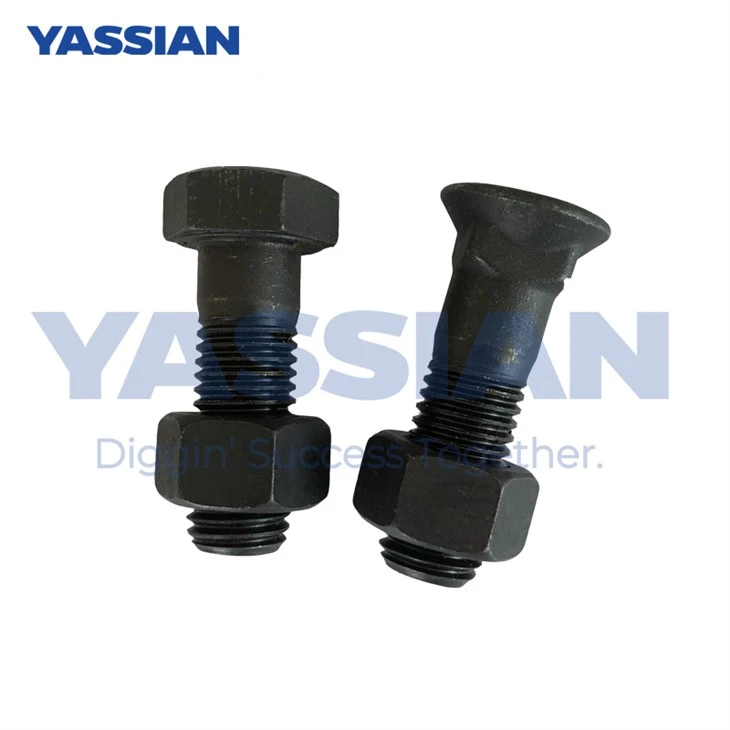
Another product we have is the Bucket Tooth Plow Bolt. These bolts are designed for heavy - duty applications, such as in tractors and construction equipment. We offer them in different strength grades to ensure they can handle the tough conditions they'll be exposed to.
And then there's the 332C9951 JCB Nut Bolt. These nuts and bolts are specifically designed for JCB equipment. They're made to high - quality standards and are available in appropriate strength grades to keep your JCB machinery running smoothly.
When you're choosing bolts and nuts, it's also important to consider other factors besides strength grade. For example, the material of the bolt and nut can affect its performance. Common materials include carbon steel, stainless steel, and alloy steel. Carbon steel bolts are strong and affordable, but they can rust if not properly protected. Stainless steel bolts, on the other hand, are corrosion - resistant, making them a good choice for outdoor or wet environments.
The finish of the bolt and nut is another factor. A good finish can protect the fastener from corrosion and also improve its appearance. Some common finishes include zinc plating, hot - dip galvanizing, and black oxide.
In addition to strength grade, material, and finish, you also need to consider the size of the bolt and nut. The size is usually specified by the diameter and the length. Make sure you choose the right size for your application to ensure a proper fit.
So, there you have it - a basic overview of the strength grade of bolts and nuts. As a supplier, we're here to help you choose the right fasteners for your project. Whether you're a DIY enthusiast or a professional engineer, we have the products and the knowledge to meet your needs.
If you're interested in purchasing our bolts and nuts, or if you have any questions about strength grades or other fastener - related topics, don't hesitate to get in touch. We're always happy to have a chat and help you find the perfect solution for your project.
References
- Machinery's Handbook, 31st Edition
- Fastener Standards and Specifications by the Industrial Fasteners Institute


