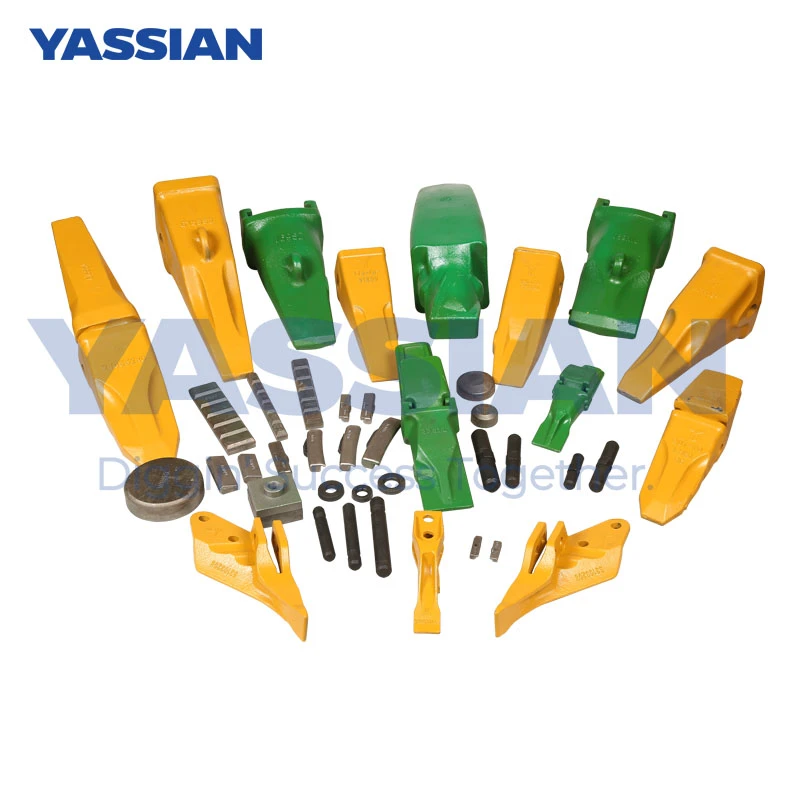
What are the differences between standard excavator bucket teeth and heavy duty bucket teeth
Material difference:
Standard bucket teeth are typically made from normal low carbon steel and are suitable for light to moderate digging applications. They are more cost-effective but may wear out more quickly in harder conditions.
Heavy duty bucket teeth are typically made from stronger materials like alloy steel with additional elements like Ni and Mo. They are designed to withstand heavy loads, abrasive materials, and tough digging conditions, offering greater durability and longevity.
Design difference:
Standard bucket teeth have a simpler design and are suitable for general-purpose digging tasks. They are lighter and may have a more basic shape like the long standard bucket tips and rock chisel bucket tips.
Heavy-duty bucket teeth are designed with reinforced structures and thicker profiles to handle more challenging excavation tasks. They are built to endure high-impact forces and abrasive materials.
Work Conditions difference:
Standard bucket teeth are suitable for light to moderate excavation work, such as landscaping, road maintenance, and light construction projects.
Heavy-duty bucket teeth are ideal for heavy-duty applications in industries like mining, quarrying, and construction, where the equipment is subjected to extreme wear and tough materials.
Cost and Longevity difference:
Standard bucket teeth are generally more affordable at first but may require more frequent replacements in harder conditions, probably increasing long-term maintenance costs.
Heavy duty bucket teeth are more expensive initially but offer greater longevity and reduced maintenance requirements, making them cost-effective in high-wear environments.
So when you choose between standard bucket teeth and heavy duty bucket teeth, consider the specific requirements of your excavation tasks to select the most suitable option for optimal performance and durability.