


When purchasing replacement track shoes, many buyers start with one simple question:
"Is the track shoe the same width as my original one?"
Although track shoe width is an important measurement, it is not enough to confirm compatibility.
Two excavator track shoes may have similar width, similar grouser shape, and a similar appearance, but they may still have different bolt patterns, track pitch requirements, mounting dimensions, or track link interfaces.
For distributors, importers, repair companies, and equipment owners, understanding track shoe compatibility is essential to avoid incorrect orders, installation problems, and unnecessary downtime.
This guide explains why width alone is not enough and what information should be checked before ordering replacement track shoes.
What Does Track Shoe Compatibility Mean?
Track shoe compatibility means that the replacement shoe correctly matches the machine's undercarriage system and can be properly installed and operated.
A compatible track shoe should match:
Machine model
Track chain configuration
Track link mounting design
Bolt pattern
Track pitch
Shoe dimensions
Grouser type
Working application
A track shoe is not an independent component. It is installed onto the track link assembly and works together with other undercarriage parts, including:
Track Chain
Track Link
Sprocket
Front Idler
Track Rollers
Carrier Rollers
Because of this, selecting the correct replacement requires more than comparing appearance.
Why Similar-Looking Track Shoes May Not Be Interchangeable

One of the most common mistakes in track shoe replacement is selecting a part based only on appearance.
A replacement shoe may look correct because it has:
Similar width
Similar grouser design
Similar number of bolt holes
Similar overall shape
However, small differences can prevent correct installation.
For example, two track shoes may have the same width but different:
Bolt hole spacing
Bolt hole diameter
Mounting pattern
Plate thickness
Track pitch requirements
The result can be:
Bolt holes not aligning
Incorrect mounting position
Poor connection with the track link
Increased stress on the undercarriage system
The key principle is:
Similar appearance does not guarantee technical compatibility.
Why Track Shoe Width Is Important but Not Enough

Excavator track shoe width is one of the first specifications buyers check.
Width affects:
Ground contact area
Ground pressure
Machine flotation
Stability
Turning resistance
For example:
Wider track shoes may help machines operate on:
Soft soil
Mud
Sand
Low-bearing-capacity ground
Narrower track shoes may be preferred for:
Rocky ground
Hard surfaces
Quarry applications
However, width only describes one part of the shoe design.
A track shoe with the correct width can still be the wrong replacement if:
The bolt pattern is different
The track pitch is incorrect
The mounting surface does not match
The shoe profile is unsuitable
Therefore:
Same width does not mean same compatibility.
Check the Track Shoe Bolt Pattern
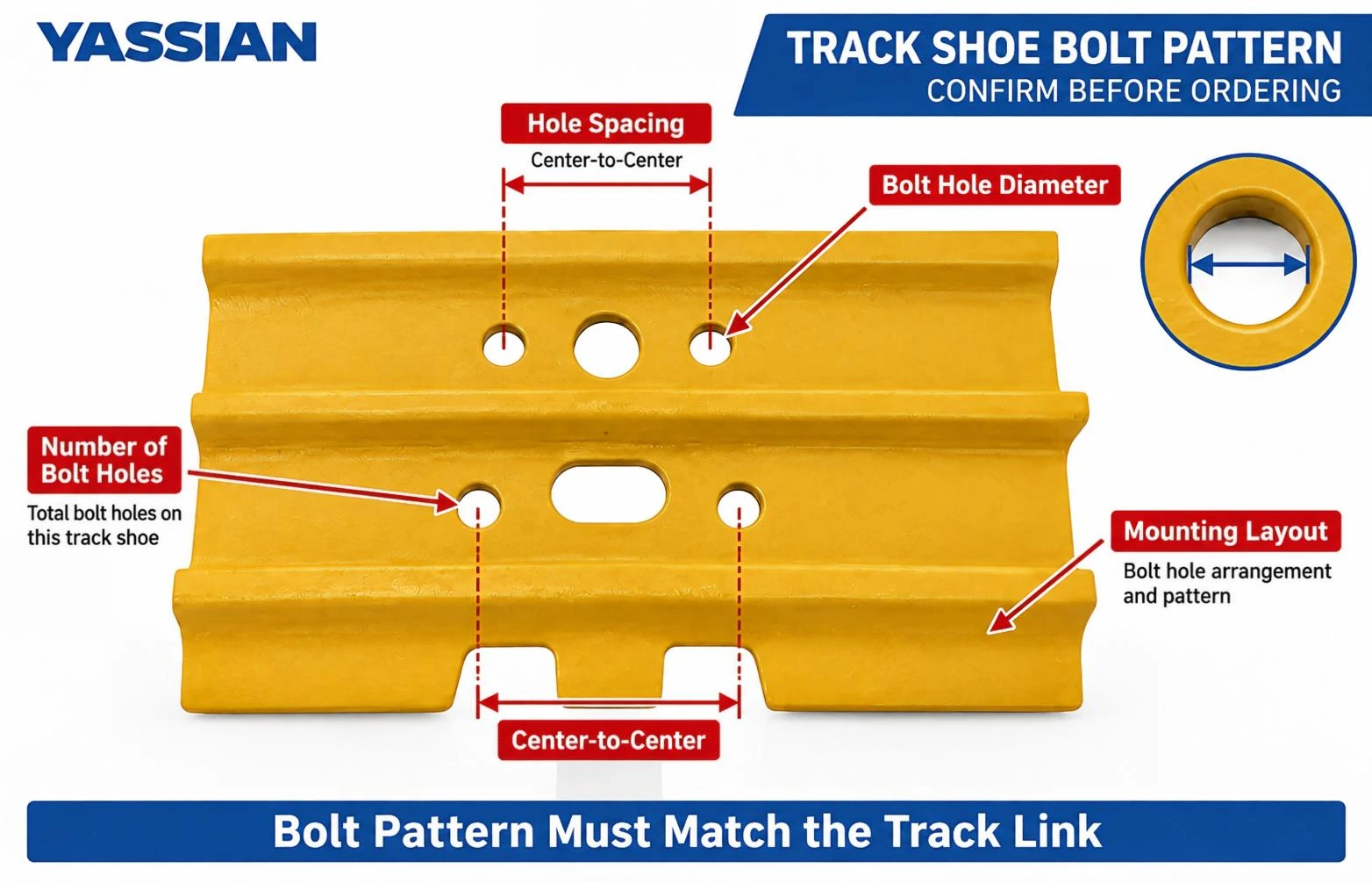
The track shoe bolt pattern is one of the most important factors when confirming replacement compatibility.
The bolt pattern includes:
Number of bolt holes
Bolt hole diameter
Hole spacing
Hole arrangement
Mounting layout
The track shoe must correctly attach to the track link.
Important measurements include:
Bolt Hole Diameter
Measure the internal diameter of the bolt hole.
For used track shoes, check for:
Enlarged holes
Oval wear
Damaged edges
Worn bolt seats
A worn hole may not represent the original dimension.
Bolt Hole Spacing
Hole spacing should normally be measured:
Center-to-center
rather than:
Edge-to-edge
Center measurement provides a more reliable reference because wear around the hole edges can affect the result.
Incorrect hole spacing can make installation impossible even if the shoe width matches.
Confirm Track Pitch Compatibility

Another important factor in excavator track shoe compatibility is track pitch.
Track pitch refers to the distance between adjacent track pins, usually measured from:
Pin Center → Pin Center
Track pitch affects the relationship between:
Track Shoe
Track Link
Track Chain
If the track pitch is incorrect, the shoe may not properly match the existing undercarriage assembly.
For better accuracy, especially with used undercarriages, measuring multiple pitches is recommended:
Total Distance ÷ Number of Pitches = Average Pitch
Multiple measurements help reduce the influence of individual joint wear.
Check Track Link and Undercarriage Compatibility

A track shoe should always be considered as part of the complete undercarriage system.
Before selecting replacement track shoes, consider:
Track Chain
The shoe must match the existing track link design.
Sprocket and Idler
Incorrect undercarriage matching can influence:
Chain movement
Engagement
Wear pattern
Track Rollers
Improper configuration may increase uneven loading.
This is why professional buyers should not evaluate track shoes separately from the complete undercarriage system.
Confirm Part Number and Machine Model Before Ordering
The safest way to identify replacement track shoes is to combine multiple sources of information.
Recommended confirmation order:
1. Machine Information
Provide:
Manufacturer
Machine model
Serial number, if available
2. Existing Part Information
Check:
Original part number
Current track shoe type
Existing supplier reference
3. Dimension Verification
Confirm:
Width
Bolt pattern
Track pitch
Plate thickness
Grouser type
4. Photo Confirmation
Useful photos include:
Full track shoe view
Top view
Bottom view
Bolt hole area
Track link connection area
Complete information makes compatibility confirmation faster and more accurate.
Common Track Shoe Compatibility Mistakes

Choosing Only by Width
Width is important, but it cannot confirm the complete fitment.
Selecting Only by Appearance
Similar-looking shoes may have different technical designs.
Ignoring Bolt Pattern
Incorrect hole layout can prevent installation.
Ignoring Track Pitch
The shoe must match the track chain configuration.
Measuring Only Worn Parts
Wear can change:
Grouser height
Hole diameter
Plate condition
Providing Incomplete Information
A single photo or width measurement is usually not enough for accurate identification.
B2B Buyer Checklist Before Ordering Replacement Track Shoes

For distributors, importers, and maintenance teams, prepare the following information:
Machine Information
Manufacturer
Machine model
Serial number (if available)
Track Shoe Information
Part number
Shoe width
Grouser type
Existing shoe design
Key Dimensions
Track shoe width
Plate thickness
Bolt hole diameter
Hole spacing
Track pitch
Application Information
Construction
Quarry
Mining
Soft ground
Heavy-duty operation
Supporting Photos
Existing track shoe photos
Track chain connection photos
Bolt hole details
This information helps suppliers confirm the correct replacement track shoes and reduces compatibility risks.
Final Thoughts
Choosing the correct excavator track shoes requires more than matching width or appearance.
A reliable compatibility check should include:
Machine Model + Part Number + Track Shoe Dimensions + Bolt Pattern + Track Pitch + Track Chain Compatibility + Working Conditions
The most important point is:
Track shoe width is only one part of compatibility.
Before ordering replacement track shoes, always confirm the complete technical information to ensure proper installation, reliable operation, and better undercarriage performance.


