


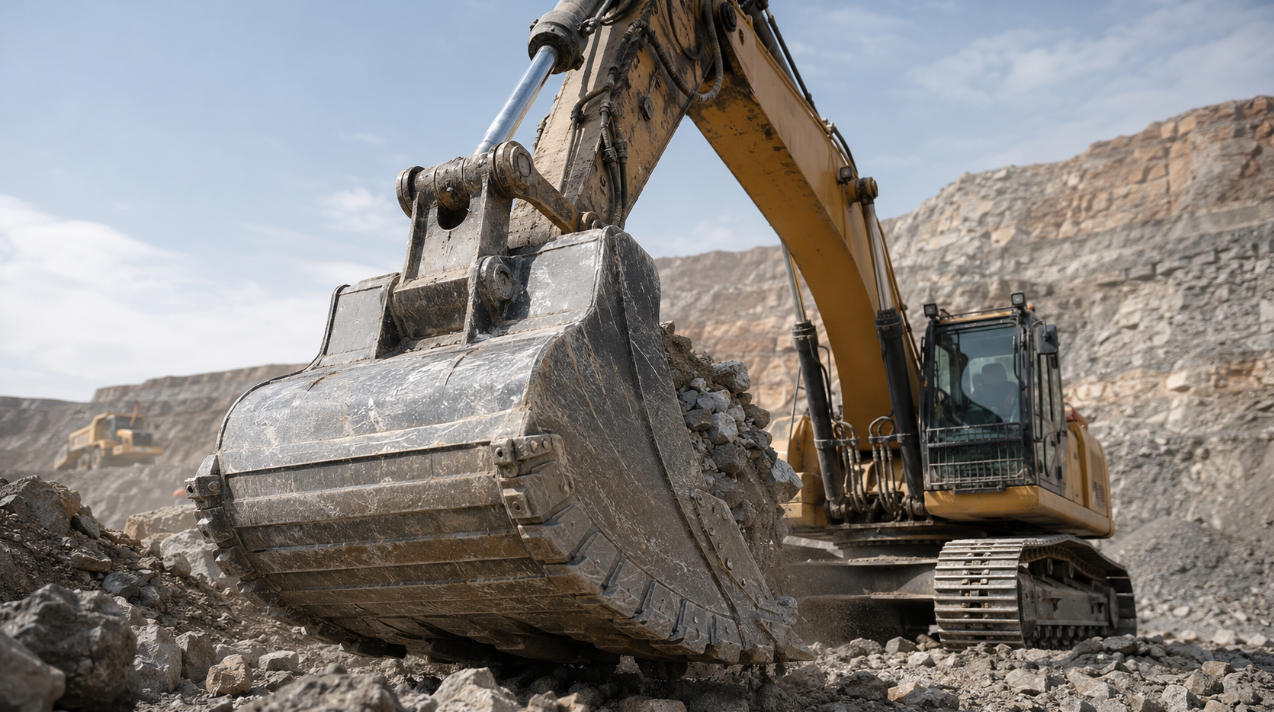
Choosing the right excavator bucket can significantly affect digging efficiency, fuel consumption, wear-part life and equipment downtime. However, buyers often find it difficult to distinguish between a heavy duty excavator bucket, a severe-duty bucket and an excavator rock bucket. These products may look similar, but they are designed for different combinations of material density, abrasion and impact.
The strongest or heaviest bucket is not automatically the best choice. A bucket that is too light may wear or crack prematurely, while an excessively heavy bucket can reduce payload, slow cycle times and increase the load on the excavator's hydraulic system.
Understanding the differences in plate thickness, wear protection, bucket teeth, side cutters and heel shrouds will help you select a bucket that matches the actual jobsite conditions.
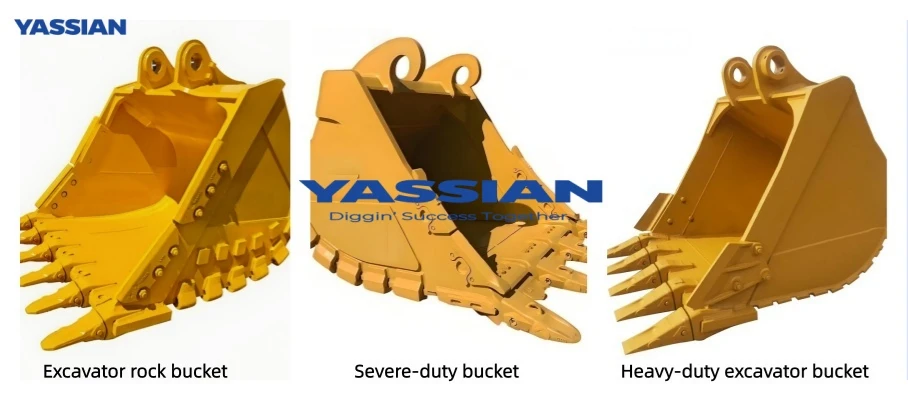
Quick Comparison of the Three Bucket Types
|
Feature |
Heavy-Duty Bucket |
Severe-Duty Bucket |
Rock Bucket |
|
Main purpose |
General heavy excavation |
Continuous high-abrasion work |
Digging and loading rock |
|
Typical materials |
Hard soil, clay, gravel and mixed materials |
Silica sand, basalt and shot granite |
Blasted rock, quarry stone and ore |
|
Wear protection |
Moderate |
Extensive |
Concentrated in high-impact areas |
|
Plate thickness |
Thicker than general-purpose buckets |
Thicker wear plates in critical areas |
Reinforced bottom, sides and corners |
|
Bucket teeth |
General-duty or penetration teeth |
Heavy-duty or abrasion-resistant teeth |
Rock or penetration teeth |
|
Side cutters |
Optional or standard |
Usually recommended |
Commonly installed |
|
Heel shrouds |
Optional |
Recommended |
Often used |
|
Bucket weight |
Medium |
Heavy |
Medium to heavy, depending on design |
It is important to note that these names are not completely standardized. Some manufacturers use terms such as "Heavy-Duty Rock," "Extreme-Duty" or "Extra Heavy-Duty." Buyers should therefore compare the actual construction rather than relying only on the product name.
What Is a Heavy Duty Excavator Bucket?
A heavy duty excavator bucket is designed for demanding excavation that exceeds the capabilities of a general-purpose digging bucket. It offers a practical balance between strength, bucket capacity, penetration and operating weight.
Common construction features include:
A thicker base edge and bucket floor;
Reinforced side plates and mounting areas;
Bottom wear strips or wear plates;
Replaceable bucket teeth and adapters;
Optional bolt-on or weld-on side cutters;
Additional reinforcement around high-stress welds.
This bucket type is suitable for hard clay, compacted soil, gravel, crushed stone and mixtures of soil and small rocks. It can also handle occasional blasted material, provided that extreme impact and abrasion are not continuous.
For road construction, utility excavation and general quarry loading, a heavy-duty bucket often provides the best balance between durability and productivity. It offers more protection than a standard bucket without adding the full weight and cost of a severe-duty design.
What Is a Severe Duty Excavator Bucket?
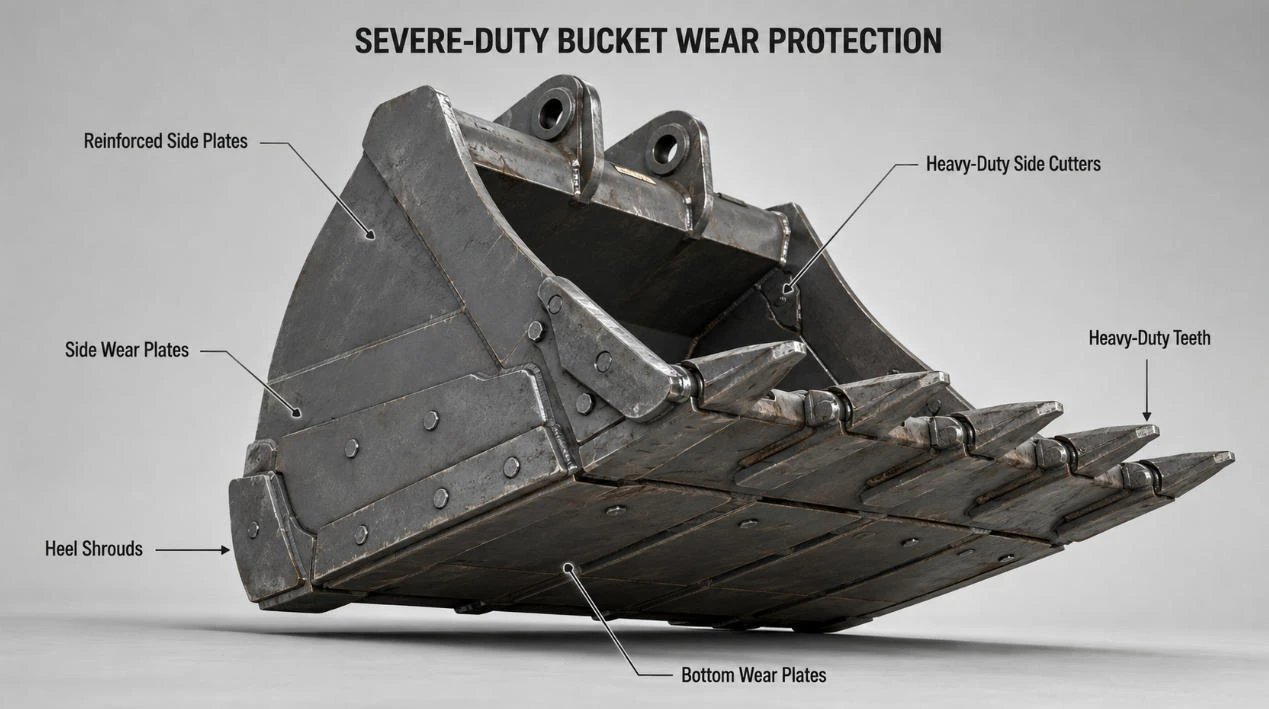
A severe duty excavator bucket is intended for environments where a conventional heavy-duty bucket would experience accelerated wear. It is commonly used in applications involving highly abrasive materials, continuous production and repeated impact.
Compared with a heavy-duty design, it may include:
Thicker bottom wear plates;
Greater wear-plate coverage;
Reinforced side wear plates;
Heavy-duty side cutters;
Heel shrouds and corner protection;
Larger teeth and adapters;
Additional reinforcement around the shell and mounting structure.
Caterpillar identifies high-silica sand, basalt and shot granite as prime applications for some of its Severe Duty buckets. It also states that the bottom wear plates on these products can be approximately 17–38% thicker than those on corresponding Heavy Duty buckets. This percentage is specific to the referenced Cat product range and should not be treated as a universal standard for every manufacturer. Caterpillar Severe Duty Bucket
A severe-duty bucket is generally a better choice when the bucket works for long hours in sharp, dense or abrasive materials and the cost of downtime is high.
What Is an Excavator Rock Bucket?
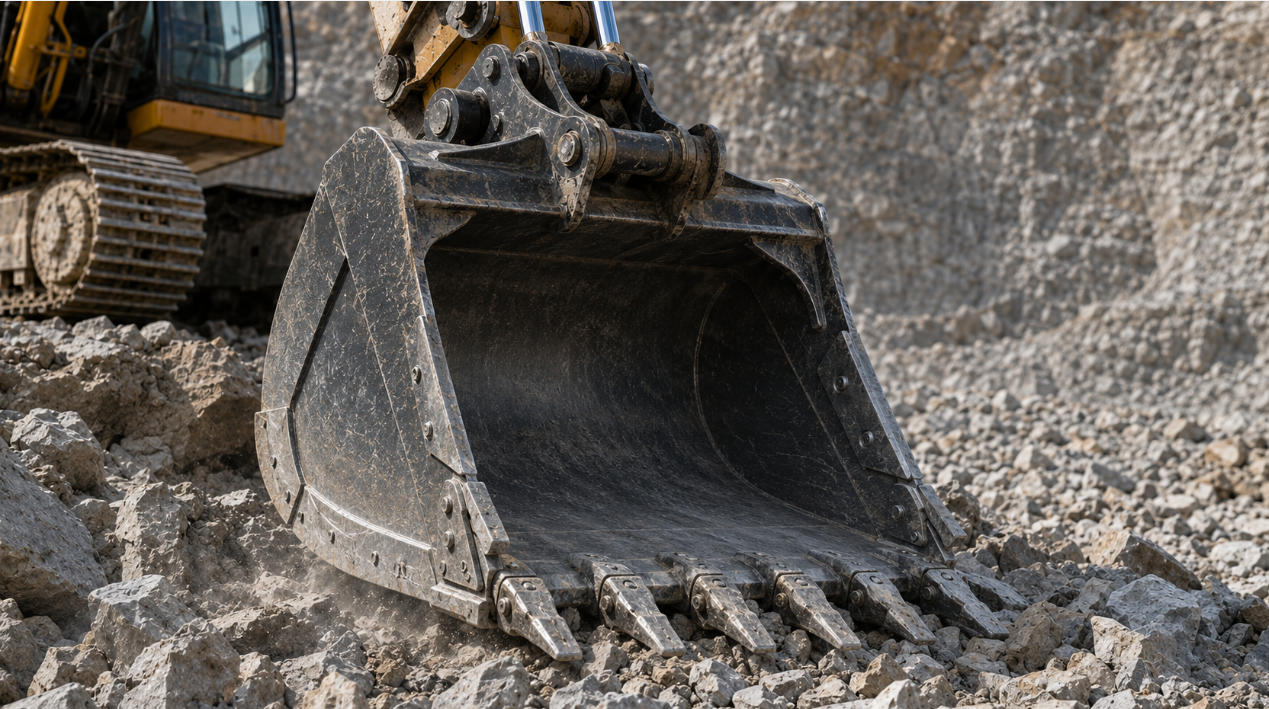
An excavator rock bucket is designed specifically for penetrating, breaking out, loading and carrying rocky materials. Typical applications include quarries, mines, demolition sites and large earthmoving projects.
A rock bucket normally has a reinforced shell, thick bottom wear plates, strengthened side plates and additional protection around the corners and heel. Its geometry may also be optimized to penetrate between rocks while retaining bulky materials.
Common wear components include:
Penetration or rock bucket teeth;
Heavy-duty tooth adapters;
Replaceable side cutters;
Side wear plates;
Bottom wear strips;
Heel shrouds;
Corner protectors.
However, "rock bucket" is often an application-based description rather than a fixed strength classification. One manufacturer's rock bucket may be comparable to another manufacturer's severe-duty or extreme-duty product.
For example, Caterpillar describes its Heavy Duty Rock Buckets for mini excavators as being similar to heavy-duty buckets but equipped with thicker wear plates for highly abrasive and high-impact applications. Caterpillar Heavy Duty Rock Bucket
Therefore, a heavy duty vs rock bucket comparison should always examine the detailed construction and wear package.
Key Structural Differences
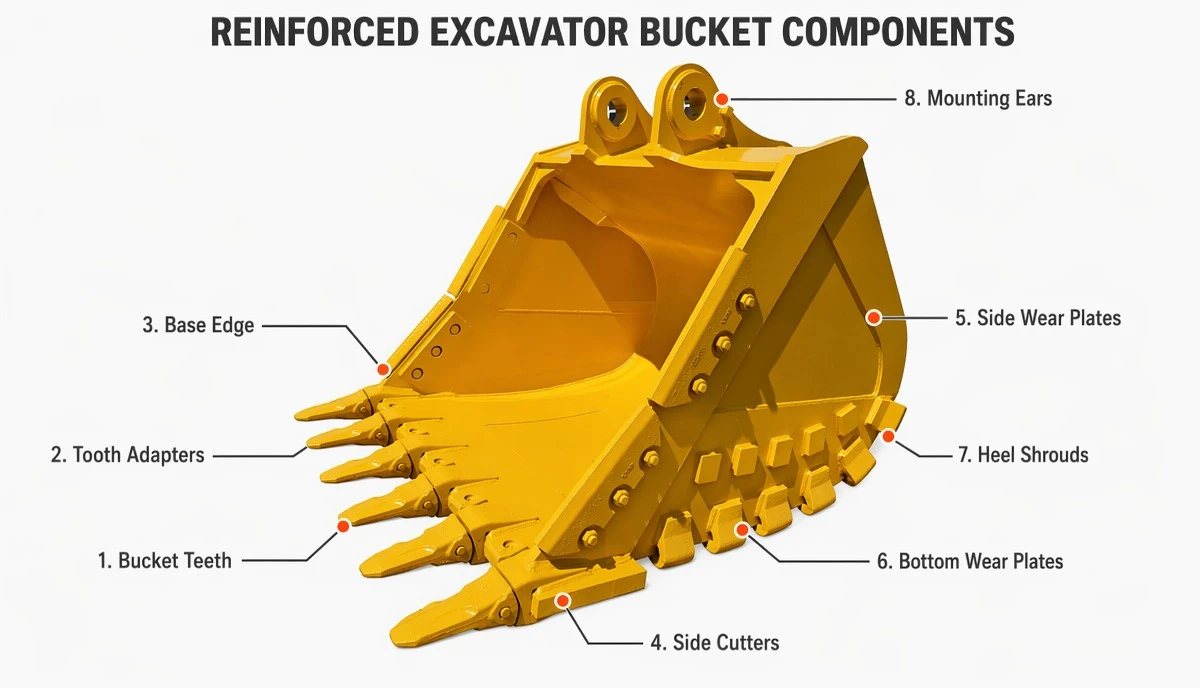
Steel Plate Thickness and Material
Heavy-duty buckets use thicker structural plates than standard digging buckets. Severe-duty and rock buckets usually add more material in areas exposed to direct abrasion and impact.
Thickness alone does not determine service life. Steel hardness, impact toughness, welding quality and the distribution of reinforcement are equally important. A well-designed reinforced excavator bucket places extra protection where it is needed without adding unnecessary weight to the entire structure.
Wear-Plate Coverage
A heavy-duty bucket may use several bottom wear strips, while a severe-duty bucket can have wider or thicker wear plates covering a greater part of the floor.
Rock buckets often reinforce the bottom, sides, corners and heel because these areas repeatedly contact sharp rocks. Replaceable protection can also reduce the need for expensive repairs to the main bucket shell.
Bucket Teeth
The correct tooth profile affects penetration, bucket filling and fuel efficiency. General or long teeth can work well in compacted soil and mixed materials. Penetration teeth are suitable for tightly packed or rocky ground, while abrasion-resistant teeth provide more wear metal for highly abrasive conditions.
Tooth size must also match the excavator's breakout force and adapter system. Installing oversized teeth does not necessarily improve performance if they reduce penetration.
Side Cutters and Heel Shrouds
Side cutters protect the lower side plates and help the bucket cut through compacted material. Heavy-duty rock applications usually require thicker side cutters or additional side protection.
Heel shrouds protect the curved rear section of the bucket when it drags across rock. They are especially valuable where heel wear occurs faster than wear on the central bottom plates.
Impact and Abrasion Are Not the Same
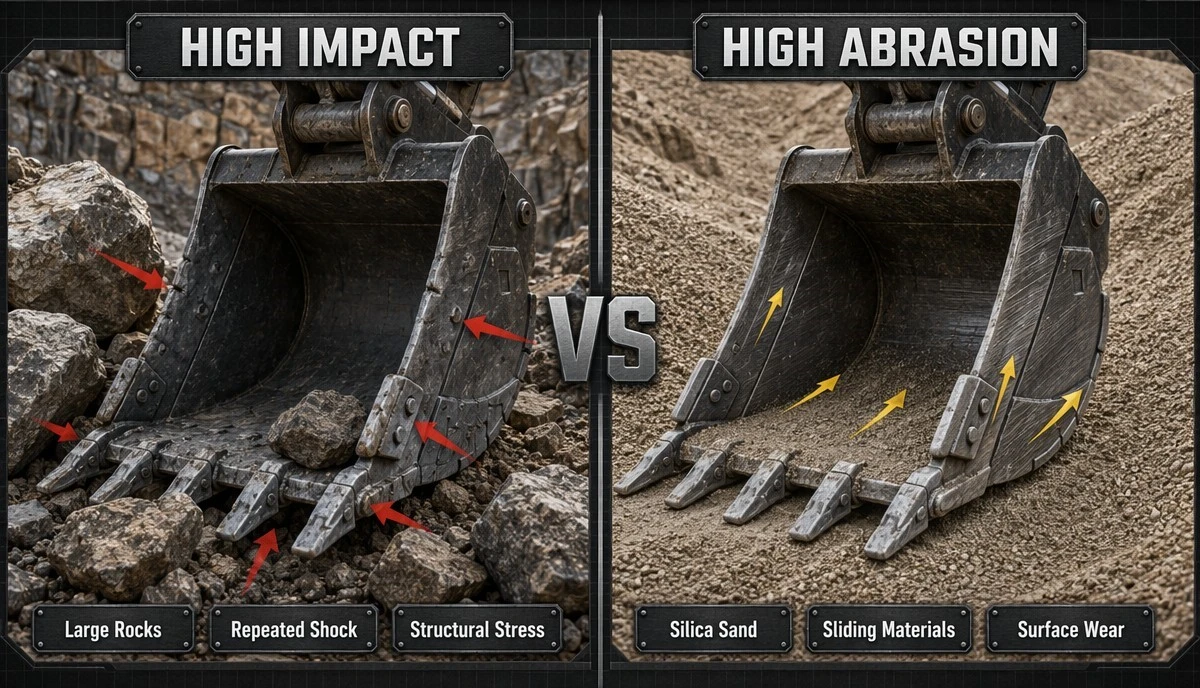
Selecting the right bucket requires understanding two different wear conditions.
Impact occurs when large rocks strike the bucket or when the operator uses the bucket to pry material from the ground. This requires structural strength and steel with sufficient toughness.
Abrasion occurs when sand, gravel or mineral particles slide across the bucket surface. This requires hard, wear-resistant steel and properly positioned wear plates.
A granite quarry may involve both high impact and high abrasion. By comparison, high-silica sand may produce extreme abrasion without the same level of large-rock impact. The bucket configuration should reflect this difference.
Which Excavator Bucket Should You Choose?
Choose a heavy duty excavator bucket when working mainly with hard soil, gravel, clay and mixed construction materials. It is usually the most versatile option for contractors who need durability without excessive bucket weight.
Choose a severe-duty bucket when abrasion is continuous, bottom and side plates wear rapidly, or equipment downtime is particularly expensive.
Choose an excavator rock bucket when blasted rock, limestone, granite, basalt or ore represents the main working material. Pay close attention to tooth configuration, side protection, heel shrouds and structural reinforcement.
Before ordering, provide the supplier with the excavator model, operating weight, required capacity, bucket width, pin dimensions, material type and working conditions. This information allows the manufacturer to match the bucket structure and wear package to the machine.
Conclusion
The main difference between heavy-duty, severe-duty and rock buckets lies in their intended working conditions and protection levels. Heavy-duty buckets balance strength and productivity, severe-duty buckets provide additional protection against continuous abrasion, and rock buckets are configured for penetrating and handling rocky materials.
Instead of selecting the heaviest available bucket, choose the lightest bucket that can reliably withstand the jobsite's real impact and abrasion levels. A properly designed reinforced excavator bucket can improve filling efficiency, extend wear-part life and reduce the total operating cost per hour.
YASSIAN manufactures excavator buckets and replacement wear parts for different machine models and applications. Bucket teeth, adapters, side cutters, wear plates and heel shrouds can be configured according to the excavator and working material.


