


A dozer idler is an essential part of the tracked undercarriage. It guides the track chain, helps maintain correct alignment and works with the track adjuster to control track tension. Although many idlers look similar, differences in dimensions, shaft design and mounting structure can make them unsuitable for the same machine.
Choosing the wrong dozer idler may cause uneven wear, track misalignment, abnormal noise and premature damage to other undercarriage components. Buyers should therefore verify the machine information, part number, dimensions, configuration and working conditions before ordering.
Understand the Function of a Dozer Idler
The idler is normally installed at the end of the track frame. As the dozer moves, the track chain travels around the idler tread while the flanges help guide the chain.
A correctly matched bulldozer idler allows the track to move smoothly and remain centered. If the idler is incorrectly sized, badly worn or installed out of alignment, the track chain may continuously contact one flange. This can accelerate wear on the idler, track links, rollers and other connected parts.
Some dozers have different front and rear guiding arrangements, particularly machines with elevated-sprocket undercarriages. Buyers should confirm the actual undercarriage design instead of assuming that every machine uses the same front idler.
Identify the Machine Information
Accurate machine identification is the first step in selecting a dozer idler. The supplier should receive the complete machine brand, model and serial number whenever possible.
A machine model alone may not be sufficient. Manufacturers sometimes change undercarriage designs between production years, series or serial-number ranges. Two machines with similar model names may use different mounting widths, shafts or track contact dimensions.
Before requesting a quotation, collect the following information:
- Machine brand and complete model
- Machine serial number
- OEM or reference part number
- Year of manufacture, if available
- Photos of the existing idler
- Required quantity
- Destination country
The OEM part number is useful, but it should still be checked against the machine model and serial number. Superseded numbers and aftermarket cross-reference numbers can sometimes cause confusion.
Confirm the Required Idler Configuration
A dozer idler assembly can be supplied in several configurations. Some customers require only the idler body, while others need the shaft, bushings, collars, brackets or related mounting parts.
Common supply options include:
- Idler body only
- Idler with shaft and bushings
- Idler with collars
- Idler with brackets or fork
- Complete idler assembly
Inspect the existing shaft, bushings, guides and track adjuster before ordering. Installing a new idler with heavily worn mounting components may result in excessive side play, poor alignment and shortened service life.
When the original part number is unavailable, provide clear photos of the complete idler, side profile, shaft ends and mounting structure.
Verify the Critical Dimensions
Products that look alike in photographs are not necessarily interchangeable. Critical dimensions should be measured and confirmed before purchasing a replacement dozer idler.
Important measurements may include:
- Overall diameter
- Tread diameter
- Flange diameter
- Overall width
- Tread width
- Flange width
- Shaft diameter
- Shaft length
- Mounting width
- Guide or bracket dimensions
Clean the component before measuring and take measurements at several points. A used idler may have uneven tread wear, flattened areas or thin flanges, so one measurement may not represent its original size.
If the existing component is severely worn, do not treat its current dimensions as the specification for a new idler. Compare the measurements with the machine parts manual, OEM information or a verified supplier drawing. There is no universal dimension or wear limit suitable for every dozer model.
Check Track Chain and Adjuster Compatibility
The idler must work correctly with the track chain and track adjuster. Buyers should confirm the track-chain pitch, link width, rail contact position and required flange clearance.
The track chain should contact the tread evenly and remain centered. Possible signs of incorrect matching include:
- Continuous contact with one flange
- Insufficient flange clearance
- Idler positioned off-center
- Track movement toward one side
- Rapid wear after installation
The shaft-end design and mounting interface must also match the adjuster and guide structure. Even if the outside diameter is correct, an unsuitable shaft or mounting width can prevent proper installation.
Consider the Working Conditions
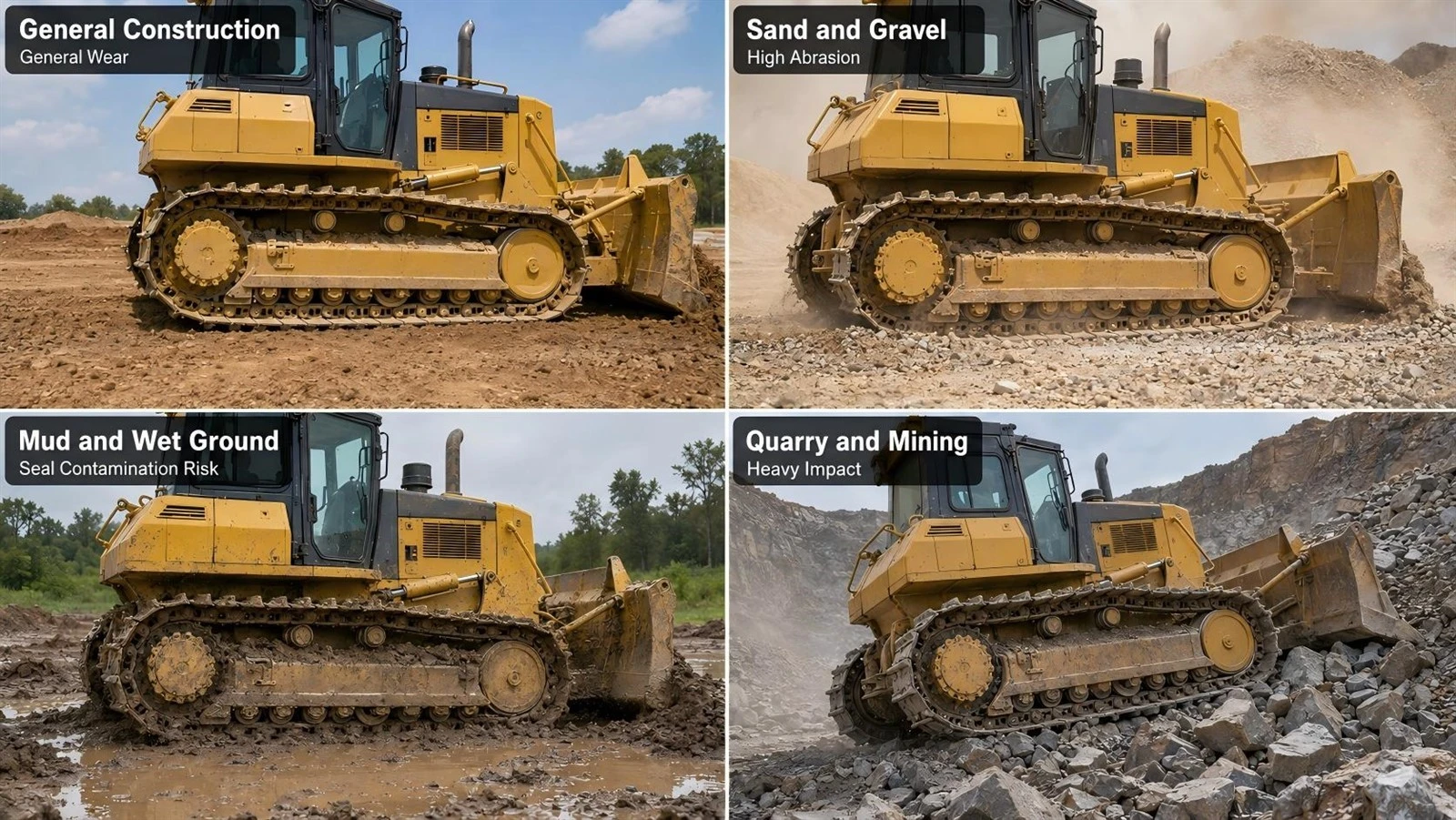
Operating conditions directly affect dozer idler wear and service life. A machine used in general construction does not experience the same conditions as a mining dozer.
Sand and gravel create high abrasive wear on the tread and flange surfaces. Mud and wet soil may pack inside the undercarriage, contaminate seals and change the effective track tension. Quarry and mining operations expose idlers to heavy loads, impact and possible surface damage.
Tell the supplier whether the machine works in:
- General construction
- Sand or gravel
- Mud or wet ground
- Quarry operations
- Mining applications
- Rocky or high-impact conditions
This information helps the supplier recommend a suitable product rather than selecting only by price.
Evaluate Dozer Idler Quality
A reliable aftermarket dozer idler should be evaluated by more than its appearance or paint finish. Material quality, heat treatment, machining accuracy, sealing and assembly all influence performance.
The tread and flanges need appropriate wear resistance while the core must retain sufficient toughness to withstand impact. Excessive brittleness may increase the risk of cracks or surface spalling.
The shaft should be accurately machined and properly matched with the bushings. Poor fit can cause vibration, rotation resistance or excessive side movement. The sealing system must prevent dirt and moisture from entering while retaining the internal lubricant.
A professional dozer idler manufacturer should inspect:
- Critical dimensions
- Surface condition
- Tread hardness
- Shaft and bushing fit
- Rotation performance
- Side play
- Oil leakage
- Product markings
- Export packaging
Avoid relying on one universal hardness value for every product. The correct material, hardness range and hardened depth depend on the idler design and manufacturing specification.
OEM vs Aftermarket Dozer Idler
OEM parts provide established specifications and direct machine references, but they may have higher prices or longer delivery times in some markets. A high-quality aftermarket product can offer a cost-effective replacement for distributors, repair companies and equipment owners.
However, aftermarket quality varies between suppliers. Before purchasing, confirm the manufacturer's compatibility verification, heat-treatment process, dimensional inspection, leakage testing, warranty and technical support.
The lowest-priced product is not always the most economical choice. Premature failure may result in additional labor, machine downtime and damage to other dozer undercarriage parts.
Avoid Common Buying Mistakes
Common mistakes include ordering by machine model only, ignoring the serial number, confusing a bare idler with a complete assembly and measuring a severely worn component.
Buyers should also avoid selecting products only by price or replacing the idler without checking the track chain, rollers, adjuster and alignment. After installation, track tension must be adjusted according to the machine's operation and maintenance manual.
Conclusion
Choosing the right dozer idler requires checking the machine model, serial number, part number, dimensions, assembly structure and working conditions. YASSIAN manufactures dozer idlers and undercarriage parts with controlled materials, heat treatment, precision machining, sealing and inspection. For a quotation, send us your machine details, reference number, product photos, critical dimensions, required quantity and application. Our team will help verify compatibility, reduce ordering errors, minimize downtime and support longer undercarriage service life. Contact YASSIAN for technical support and a competitive quote.


